
Respiratory vaccines can help protect you and the people around you from serious illness caused by influenza (flu), COVID-19, respiratory syncytial virus (RSV), and pneumococcal disease. The protection you need depends on your age, health, pregnancy status, and vaccination history.
The information below is meant to serve as a starting point. Talk to a healthcare professional about the specific vaccines, doses, and timing that are right for you and your family.
Nearly all vaccines recommended by the Centers for Disease Control and Prevention or national medical societies are covered by private and public insurance–including Medicaid, Medicare, and TRICARE—with no cost sharing. That said, coverage can vary based on the vaccine, your eligibility, and where you receive it, so check with your insurance plan or healthcare professional before your appointment.
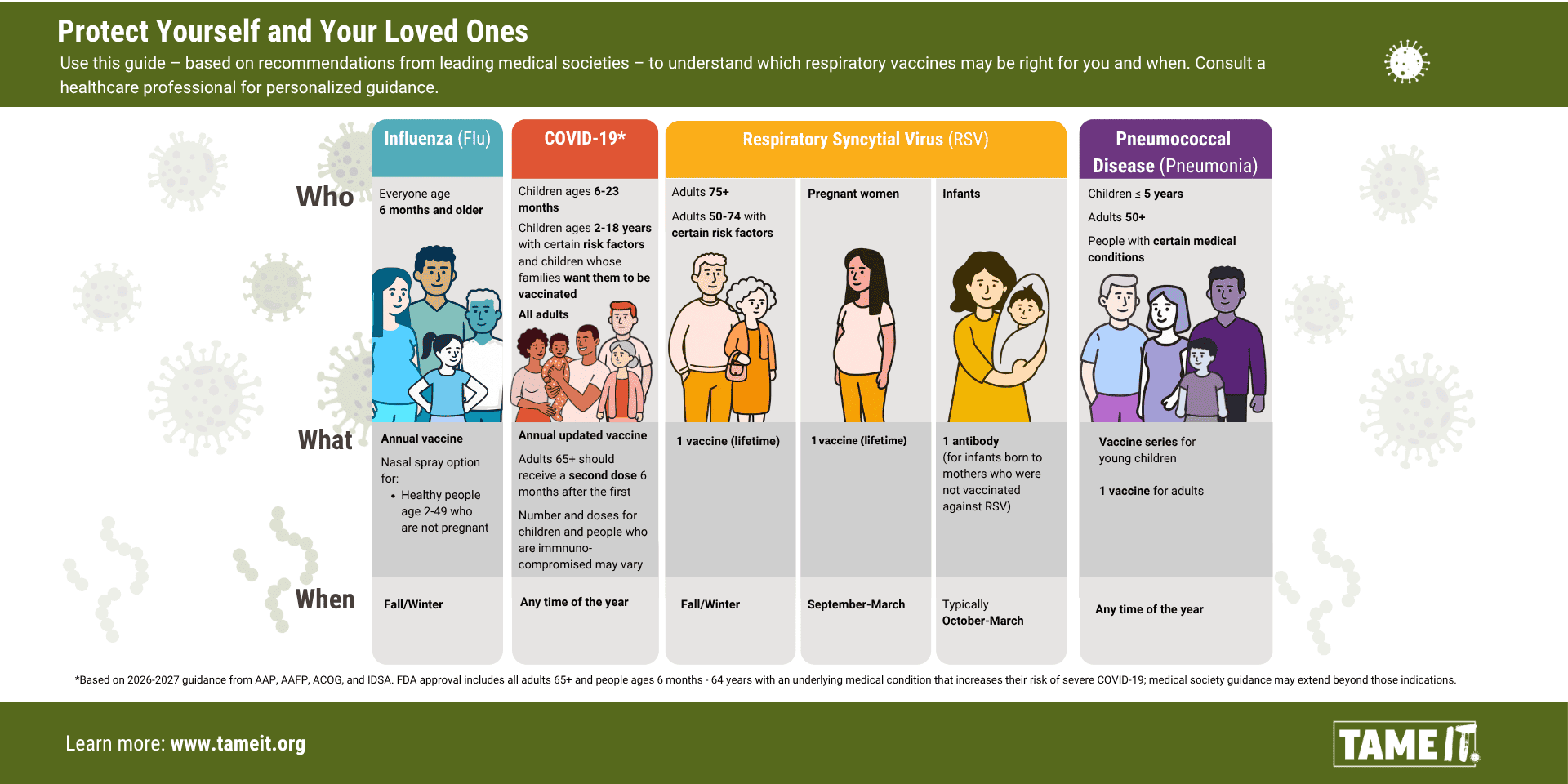
Explore by Life Stage and Health Needs
These vaccines are recommended for infants, children, and adolescents from birth through age 18. Recommendations vary by age, health conditions, and vaccination history:
- Flu: Everyone age 6 months or older should get an annual flu vaccine. Children ages 6 months through 8 years need two doses during their first season of vaccination. Nasal flu vaccine, which can be given at home, is an option for healthy children ages 2 years and older.
- COVID-19: Vaccination is recommended for all children ages 6-23 months. For children ages 2-18 years, COVID-19 vaccination is recommended for those at greater risk of severe illness, including children who have never been vaccinated, children who have or live with someone who has a chronic health condition, children with impaired immune systems due to disease (e.g., cancer or HIV) or medications they must take to treat a health condition (e.g., for organ transplantation). The COVID-19 vaccine is also available to any family that wants protection from COVID-19 disease.
- RSV: All babies should receive protection against RSV through either maternal vaccination during pregnancy or a preventive monoclonal antibody in their first year of life (or first RSV season). For certain children between 8 and 19 months, an additional monoclonal antibody dose may be recommended as they enter their second RSV season.
View recommendations:
These vaccines are recommended for adults ages 19-49:
- Flu: Annual flu vaccination is recommended for all adults. Nasal flu vaccine, which can be given at home, is an option for healthy adults ages 19-49 who are not pregnant.
- COVID-19: An updated COVID-19 vaccination is recommended for all adults.
- RSV: RSV vaccination is not routinely recommended for adults younger than 50, except for adults who are pregnant (See Pregnant Women below).
- Pneumococcal Disease: Adults ages 19-49 should be vaccinated if they have certain health conditions or other risk factors.
View recommendations:
American Academy of Family Physicians (AAFP) Adult Immunization Schedule
These vaccines are recommended for adults age 50 and older:
- Flu: Annual flu vaccination is recommended for all adults. Adults age 65 and older should receive a higher dose, adjuvanted, or recombinant flu vaccine when one is available. Another option for adults age 50 and older is the new mRNA flu vaccine, which is available for the first time this season. The clinical trial that led to the approval of this vaccine showed that it is at least as effective as standard dose influenza vaccine.
- COVID-19: Updated vaccination is recommended for all older adults. People age 65 and older and those with weakened immune systems may need additional doses.
- RSV: One dose is recommended for everyone age 75 and older and for adults 50-74 who face greater risk of severe RSV, including those who have certain chronic health conditions, such as lung disease, heart disease, or weakened immune systems, or those who live in nursing homes.
- Pneumococcal Disease: All adults age 50 and older should receive pneumococcal vaccination. Several vaccines are available—the vaccine and number of doses needed depend on which pneumococcal vaccines an individual has previously received.
View recommendations:
American Academy of Family Physicians (AAFP) Adult Immunization Schedule
Vaccination during pregnancy can protect both the pregnant woman and the baby. These respiratory vaccines are recommended for pregnant women:
- Flu: Annual flu vaccination is recommended during any trimester for those who are or will be pregnant during flu season.
- COVID-19: Updated COVID-19 vaccination is recommended during pregnancy, while planning a pregnancy, after giving birth, and while breastfeeding.
- RSV: Maternal RSV vaccination is recommended for eligible pregnant women during weeks 32-36 from September through March in most of the continental US. For infants born to mothers who did not receive a maternal RSV vaccine during pregnancy, a monoclonal antibody is recommended (See the Children section above).
- Pneumococcal Disease: Pneumococcal vaccination is not routinely recommended during pregnancy but may be recommended based on individual health conditions or risk factors.
- Tdap Vaccine: Additionally, all pregnant women should receive a Tdap (tetanus, diphtheria, and pertussis/whooping cough) vaccine during each pregnancy to prevent whooping cough in their infant.
View recommendations:
American College of Obstetricians and Gynecologists (ACOG) Maternal Immunization Schedule
People with diabetes, heart disease, lung disease, or other health conditions are at higher risk for serious complications of respiratory diseases, as are people who have other risk factors (such as smoking or alcohol use disorder). These vaccines are recommended for people at higher risk:
- Flu: Annual vaccination is recommended—and especially important—for people with chronic health conditions or weakened immune systems as these groups face greater risk of serious complications.
- COVID-19: Updated vaccination is recommended—and especially important—for people of all ages at increased risk of severe illness. People with weakened immune systems may need additional doses.
- RSV: RSV vaccination is recommended for adults ages 50-74 who have certain health conditions or other factors that increase risk. Preventive RSV antibodies are also recommended for some infants and young children at greater risk.
- Pneumococcal Disease: Children and adults with certain health conditions may need pneumococcal vaccination earlier or require additional doses.
Because recommendations can vary and depend on a person’s health condition, medications, age, and vaccination history, talk with a healthcare professional about what vaccines you and your family may need.
View recommendations:
American Academy of Pediatrics (AAP) Immunization Guidance
American Academy of Family Physicians (AAFP) Adult Immunization Schedule
Explore by Respiratory Disease
Flu can cause serious illness.
Flu is a contagious respiratory illness caused by influenza viruses that infect the nose, throat, and lungs. It can cause fever, cough, congestion, sore throat, body aches, headaches, chills, and fatigue. While many people recover within a few days to two weeks, flu can lead to pneumonia and other serious complications that can result in hospitalization or even death.
Who is most likely to become seriously ill from flu?
Anyone can become seriously ill from flu. That said, young children, older adults, pregnant women, and people with certain health conditions face a greater risk of complications.
A flu vaccine is recommended every year.
Everyone ages 6 months and older should receive a flu vaccine each year. Vaccination can lower your chance of getting flu and reduce the risk of severe illness, hospitalization, and death if you do get sick.
The type of vaccine and number of doses recommended may vary based on factors like age, health status, and vaccination history. Learn more about vaccine recommendations (see Life Stage and Health Needs above) and talk to your healthcare professional about which vaccines are right for you.
When should you get vaccinated?
Flu vaccines are updated each year to protect against the specific strains of the virus that are expected to circulate that season. Vaccination is recommended before flu begins spreading widely—typically September or October in the US. But while flu season usually starts in the fall, it can extend through May, and vaccination later in the season can still provide protection.
COVID-19 can cause serious and long-term illness.
COVID-19 is a contagious illness caused by the SARS-CoV-2 virus. It can cause cough, congestion, sore throat, body aches, headaches, fever or chills, fatigue, loss of smell or taste, digestive symptoms, and difficulty breathing. Although many people experience mild illness and full recovery, COVID-19 can cause serious illness that leads to hospitalization or death. Some people may also develop Long COVID, a chronic condition that can cause long-term symptoms that last for months or longer.
Some people face a higher risk of severe COVID-19.
Anyone can become seriously ill from COVID-19. However, the risk is greater for older adults, people with weakened immune systems, and people with chronic conditions such as heart disease, lung disease, diabetes, or obesity. Children under age 2 and pregnant women are also more likely to get very sick from COVID-19. Risk generally increases with age and may be higher for people with more than one underlying health condition.
Vaccination helps protect against severe illness and may lower the risk of Long COVID.
COVID-19 vaccination strengthens the body’s protection against the virus. Even if you are exposed and develop an infection, it can reduce your risk of severe illness, hospitalization, and death. There is also evidence that vaccination may lower the risk of developing Long COVID.
Who should get an updated COVID-19 vaccine?
COVID-19 vaccination is recommended broadly, but specific recommendations differ based on age and risk factors.
Current guidance from leading medical organizations recommends vaccination for:
- Adults: The American Academy of Family Physicians recommends an updated COVID-19 vaccine for all adults, with a particular emphasis on older adults, people at increased risk of severe illness, and people who have never been vaccinated.
- Infants, children, and adolescents: The American Academy of Pediatrics recommends vaccination for all children ages 6-23 months. For children and adolescents ages 2-18 years, vaccination is recommended for those who face greater risk of severe illness, have never been vaccinated, live with someone at higher risk or live in certain group settings, or anyone who wants the protection vaccines can provide.
- Pregnant women: The American College of Obstetricians and Gynecologists recommends updated COVID-19 vaccination during pregnancy, as well as for people who are planning a pregnancy, recently gave birth, or are breastfeeding.
Some people, including those with weakened immune systems, may need additional vaccine doses or a different vaccination schedule. Learn more about vaccine recommendations (see Life Stage and Health Needs above) and talk with your healthcare professional about which vaccines are right for you.
RSV is common but can be serious, especially for babies and older adults.
Respiratory syncytial virus (RSV) is a common respiratory disease that can cause mild cold-like symptoms including runny nose, coughing, sneezing, fever, loss of appetite, and wheezing. That said, some people develop severe cases of RSV, which can cause serious lung infections, such as bronchitis and pneumonia, that can lead to hospitalization or death.
Infants—especially those younger than 6 months or born prematurely—face a greater risk of severe disease from RSV infection. Older adults and people with certain chronic conditions or weakened immune systems are also more likely to become seriously ill.
Vaccines and preventive antibodies can protect against severe RSV.
RSV vaccines are available for older adults and pregnant women. Vaccination during pregnancy helps protect the baby by passing antibodies from the pregnant woman to the baby before birth.
Babies may also receive a long-acting, preventive monoclonal antibody that provides protection during RSV season. Most babies need either protection through maternal vaccination or a preventive antibody given within the first week of life—not both.
Who should be immunized against RSV?
Vaccines and preventive monoclonal antibodies are recommended to help protect against RSV for groups that are at high-risk for serious illness including:
- Older adults: A single dose of an RSV vaccine is recommended for everyone age 75 and older and for adults who face an increased risk of severe RSV.
- Pregnant women: Maternal vaccination is recommended during weeks 32-36 of pregnancy during September-March to protect the baby after birth.
- Infants and some young children: A single dose of a monoclonal antibody is recommended for infants younger than 8 months born to mothers who did not receive an RSV vaccine during pregnancy. The dose should be given shortly before RSV season, or within one week of birth if born during RSV season (typically October-March). An additional dose—ahead of the child’s second RSV season—may also be recommended for children age 8-19 months who are at increased risk for severe RSV.
Recommendations vary based on age, health and pregnancy status, and immunization history. Learn more about recommendations (see Life Stage and Health Needs above) and talk with your healthcare professional about which option is right for you or your child.
When should you be immunized against RSV?
In most of the continental US, older adults are encouraged to get vaccinated in late summer or early fall, before RSV begins spreading widely.
Maternal RSV vaccination is recommended during weeks 32-26 of pregnancy from September through January. Preventive antibodies are generally given to babies shortly before RSV season or soon after birth if they are born during the season. Timing may differ in areas with different patterns of RSV activity.
Pneumococcal disease can cause several types of serious infection.
Pneumococcal disease is caused by bacteria than can infect different parts of the body. Some infections, such as certain ear and sinus infections, are usually mild. Others can be life-threatening.
Pneumococcal bacteria can cause pneumonia when they infect the lungs, meningitis when they infect the lining of the brain and spinal cord, and bacteremia—which can lead to sepsis—when they infect the bloodstream. These are all serious conditions that often require hospitalization and can lead to death.
Who is most likely to become seriously ill from pneumococcal disease?
Anyone can develop pneumococcal disease, but young children, older adults, and people with certain health conditions face a greater risk of serious infection. Conditions that increase risk include heart, lung, kidney, or liver disease; diabetes; sickle cell disease; and conditions or treatments that weaken the immune system. Smoking can also increase risk.
Vaccination can prevent many serious pneumococcal infections.
Pneumococcal vaccines help protect against many of the types of bacteria that cause pneumococcal disease, and can reduce the risk of pneumonia, meningitis, bloodstream infections, and other serious complications.
Pneumococcal vaccination is not recommended every year, rather the vaccine type and number of doses needed depend on factors like age, health status, and vaccination history.
Who should get vaccinated—and which vaccine do you need?
Current guidance recommends pneumococcal vaccination for:
- Children: All children younger than age 5 should receive a routine series of pneumococcal vaccines. Older children with certain health conditions may need additional vaccination.
- Adults: All adults age 50 and older should receive a pneumococcal vaccine. Additionally, adults ages 19-49 with certain health conditions or risk factors should also be vaccinated.
Several pneumococcal vaccines are available. Some people need only one dose, while others may need more than one type of vaccine. Learn more about vaccine recommendations (see Life Stage and Health Needs above) and talk with your healthcare professional about which vaccines are right for you and your family.